 Skip to content

Custom Precision Jigs and Fixtures
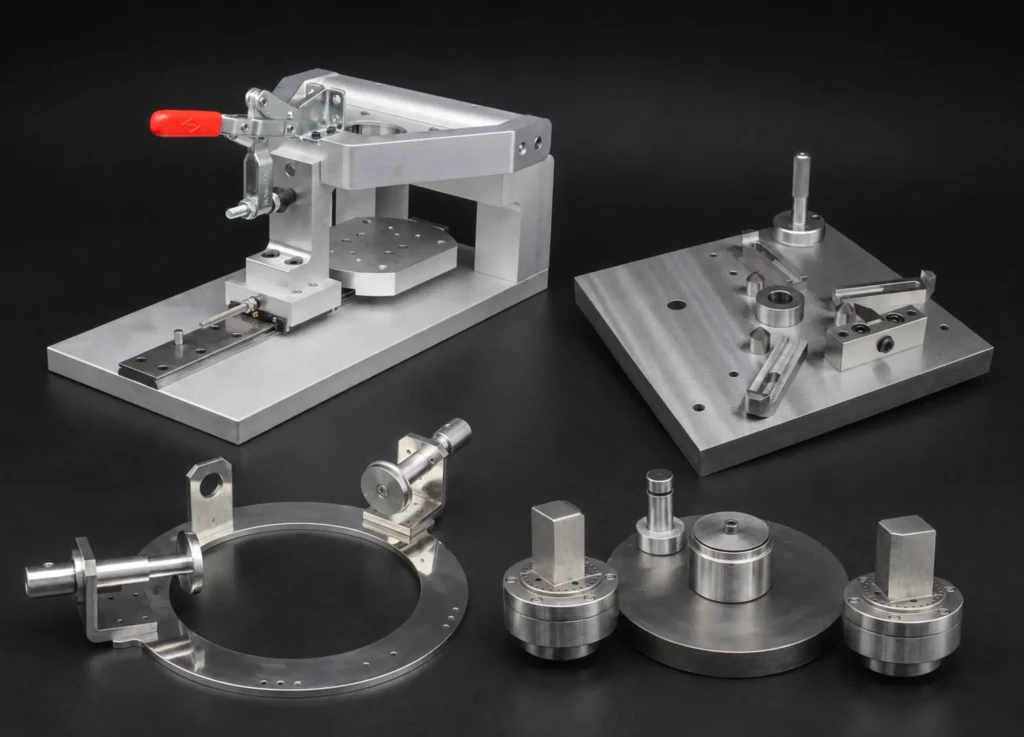
Sundi MFG designs and manufactures custom precision jigs and fixtures for machining, welding, assembly, inspection, and production support.
Our fixtures help improve part positioning, repeatability, and workflow efficiency in complex manufacturing processes. Each design is made to reduce operator variation, improve clamping stability, and support consistent output across repeated production cycles.
-
Custom machining fixtures, inspection fixtures, assembly fixtures, welding fixtures, and positioning jigs.
-
Designed to improve repeatable positioning, clamping stability, and production consistency.
-
Support for aluminum, steel, stainless steel, tool steel, engineering plastics, and other fixture materials.
-
Suitable for automotive, aerospace, robotics, automation equipment, and precision manufacturing applications.
- Quote in 8h
- 7-15 Days Lead Time
- STEP / DXF / IGES Accepted
- Strictly Confidential (NDA Supported)


Common Jig & Fixture Problems We Help Solve
In machining, welding, assembly, and inspection, many quality problems come from unstable positioning, weak clamping, operator variation, or fixture wear.
Sundi MFG helps manufacturers improve accuracy, repeatability, and workflow efficiency through custom jig and fixture design, precision machining, proper material selection, and inspection control.
01
Poor Positioning Accuracy
Unstable locating points, loose fits, or inaccurate reference surfaces can cause part misalignment, dimensional errors, and assembly problems.
- We review the workpiece structure, datum references, locating points, and tolerance requirements to improve positioning accuracy.
02
Weak Clamping Stability
Poor clamping design may cause part movement, vibration, deformation, or inconsistent machining results during production.
- We design suitable clamping structures to improve holding stability, reduce part movement, and support safer operation.
03
Operator Variation
Manual positioning and repeated setup can lead to different results between operators, shifts, or production batches.
- Our jigs and fixtures help simplify operation, reduce human error, and make repeated production more consistent.
04
Slow Workflow and Downtime
Inefficient fixture design can increase setup time, inspection time, adjustment work, and machine downtime.
- We help optimize fixture layout, loading method, and inspection points to improve workflow efficiency and reduce production delays.
Custom Jigs & Fixtures by Application
Different production processes require different fixture structures. Sundi MFG designs and manufactures custom jigs and fixtures based on your workpiece shape, positioning method, clamping requirement, tolerance, and production workflow.
Whether you need machining fixtures, welding fixtures, assembly fixtures, bending jigs, drill jigs, or inspection fixtures, our team can help review your application and provide a practical fixture solution.
- Strictly Confidential (NDA Supported)

Holding & Clamping Fixtures
Holding and clamping fixtures keep workpieces stable during machining, welding, assembly, or inspection.
They help reduce part movement, improve positioning repeatability, and support safer and more consistent production.

Assembly Fixtures
Assembly fixtures help position multiple parts accurately during fitting, fastening, bonding, or checking.
They are used to improve assembly consistency, reduce manual adjustment, and make repeated production easier to control.

Bending jigs
Bending jigs help control bending angle, part position, and forming consistency during manual or semi-automatic bending operations.
They are suitable for parts that require repeatable bending results and stable shape control.

Welding Fixtures
Welding fixtures hold parts in the correct position before and during welding.
They help reduce deformation, improve weld alignment, and support repeatable welding quality for metal frames, brackets, and structural parts.

Drill Jigs & Tooling Jigs
Drill jigs guide hole position, drilling direction, and machining reference points.
They help improve hole accuracy, reduce setup time, and make repeated drilling or machining operations more stable.

Inspection & Checking Fixtures
Inspection and checking fixtures are used to verify part size, position, shape, and assembly fit.
They help speed up quality inspection, reduce manual measurement errors, and support stable batch production control.
Benefits of Custom Jigs & Fixtures
Custom jigs and fixtures help turn repeated manual operations into a more stable and controlled production process.
By improving part location, clamping stability, and operation flow, the right fixture can help manufacturers reduce variation, shorten setup time, and maintain more consistent quality across machining, welding, assembly, and inspection work.
| Benefit | How It Helps Your Production |
| Stable Part Positioning | Keeps the workpiece located against fixed reference points, reducing alignment errors during repeated operations. |
| Better Clamping Control | Holds parts securely without unnecessary movement, vibration, or deformation during machining or assembly. |
| Improved Repeatability | Helps different operators achieve more consistent results across shifts, batches, and long production runs. |
| Faster Setup and Changeover | Simplifies loading, positioning, and adjustment steps to reduce non-cutting time and workflow delays. |
| Lower Rework and Scrap Risk | Reduces dimensional variation, fitting problems, and inspection failures caused by unstable manual handling. |
| Easier Inspection and Quality Control | Supports quick checking of key dimensions, positions, and assembly fit during batch production. |
| More Efficient Production Flow | Makes machining, welding, assembly, and inspection processes easier to standardize and repeat. |
Need Custom Jigs or Fixtures for Your Production?
Send us your part drawing, sample photo, or fixture requirement.
Sundi MFG will review your workpiece structure, positioning needs, clamping method, tolerance, and production process to provide a practical jig and fixture solution.
Manufacturing Capabilities for Custom Jigs & Fixtures
Sundi MFG uses CNC machining, EDM, wire cutting, grinding, assembly, and inspection processes to manufacture custom precision jigs and fixtures from your drawings or samples.
These capabilities help us control fixture base plates, locating points, clamping structures, holes, slots, reference surfaces, and assembly accuracy for machining, welding, assembly, and inspection applications.
Wire EDM & Die-sinking EDM
For narrow slots, sharp corners, fine profiles, and precise fixture details.
Precision Grinding & Precision Finishing
For flatness, smooth surfaces, tight fits, and accurate reference faces.
CNC Machining
For fixture plates, holes, pockets, slots, threads, and complex machined structures.
Our Equipment List
For CNC machining, EDM, grinding, assembly, and fixture quality checking.
Quality Control for Custom Jigs & Fixtures
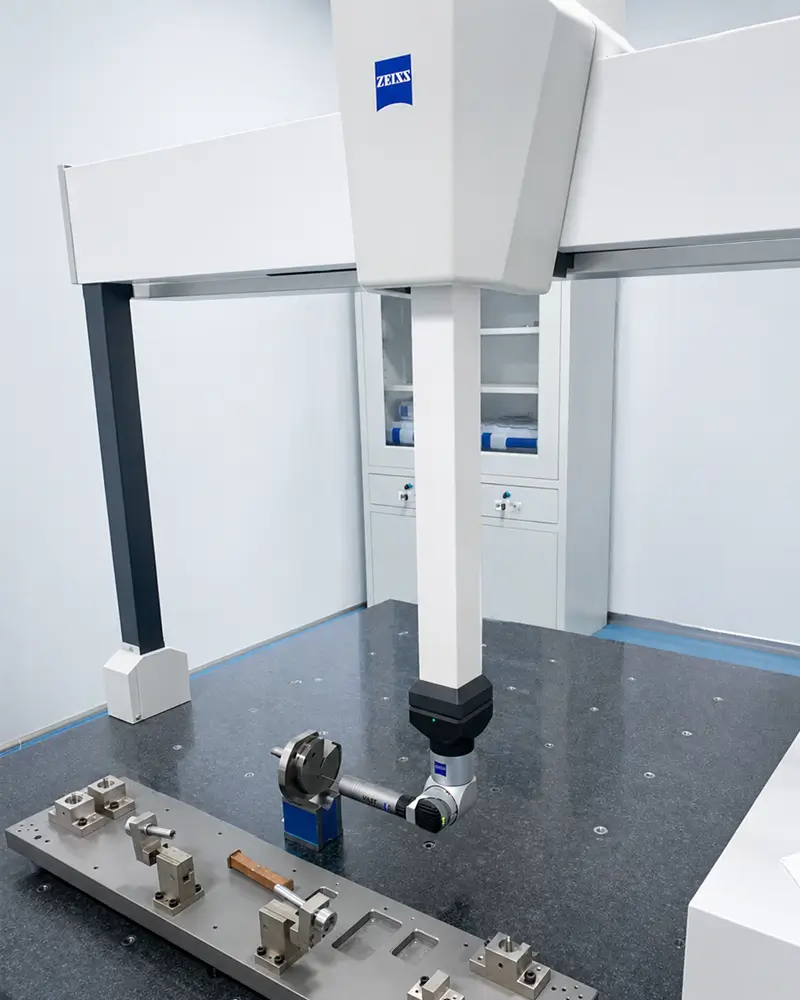
Sundi MFG controls the quality of custom jigs and fixtures from drawing review to final inspection and assembly checking.
Before production, we review your fixture drawings, workpiece requirements, datum references, locating points, clamping positions, tolerance needs, and inspection purpose. After machining and assembly, we check key dimensions and functional areas to ensure the fixture can support stable positioning and repeatable production.
-
Drawing review before production to confirm datum references, locating points, hole positions, clamping areas, and tolerance requirements.
-
In-process inspection for fixture base plates, holes, slots, reference surfaces, and key machined components.
-
Assembly checking for locating pins, clamps, supports, guide parts, and moving components.
-
Final inspection for dimensions, flatness, parallelism, positioning accuracy, appearance, and fixture function before shipment.
-
Inspection reports can be provided based on your project requirements.
Why We Provide Engineer-Reviewed Quotes
Custom jigs and fixtures require more than a quick price check. Workpiece shape, datum references, positioning method, clamping structure, tolerance, material, and production workflow all affect the final design and manufacturing cost.
Before quotation, our team reviews your drawing or sample details to check fixture feasibility, key dimensions, locating points, clamping requirements, and possible production risks.
This helps you receive a more accurate price, a realistic lead time, and a practical fixture solution for your production needs.
Our Ordering Process
We are a direct-to-factory manufacturer, not a brokered quote platform. Every component is engineered, machined, and inspected in-house at Sundi. This ensures complete control over technical precision, production lead times, and data security from your initial drawing to final delivery.
Send RFQ
Submit your 2D/3D CAD models and technical specifications via our secure online form or direct email.
Review & Quote
Our technical team evaluates your drawings for manufacturability and provides a detailed, data-driven quotation within 12 hours.
Confirm Order
Finalize technical parameters, confirm tolerances, and lock in the production schedule prior to contract sign-off.
Production
CAM programming is executed, and production begins across our specialized CNC, EDM, or stamping lines.
Quality Inspection
In-process dimensional checks and a comprehensive final inspection ensure all parts meet specified tolerances before leaving the floor.
Packaging & Shipping
Components are meticulously packed using dedicated protective materials to prevent transit damage and shipped globally.
FAQs
How long does Sundi MFG need to deliver custom jigs and fixtures?
The typical lead time is 7–15 days after the drawing, sample details, fixture requirements, material, and inspection needs are confirmed.
For complex fixtures, assembly fixtures, welding fixtures, or inspection fixtures with tight positioning requirements, the lead time may be longer.
What types of jigs and fixtures can you manufacture?
We manufacture custom machining fixtures, welding fixtures, assembly fixtures, bending jigs, drill jigs, inspection fixtures, checking fixtures, positioning jigs, and clamping fixtures.
These fixtures can be used for machining, welding, assembly, inspection, testing, and production support.
Can you design fixtures based on our workpiece drawings?
Yes. We can review your workpiece drawings, samples, or application requirements and help develop a practical fixture solution.
To support fixture design, it is helpful to provide the part drawing, 3D model, tolerance requirements, production process, clamping needs, and inspection purpose.
What information is needed for a fixture quotation?
For an accurate quote, please provide the workpiece drawing, fixture purpose, quantity, material requirement, tolerance needs, and how the fixture will be used.
If it is a welding, assembly, or inspection fixture, please also share the required locating points, checking points, and production workflow if available.
Can you make inspection and checking fixtures?
Yes. We manufacture inspection and checking fixtures for part positioning, dimensional checking, assembly fit checking, and batch quality control.
These fixtures help reduce manual measurement errors and improve inspection efficiency during repeated production.
What materials can be used for jigs and fixtures?
Common fixture materials include aluminum, steel, stainless steel, tool steel, engineering plastics, and other materials depending on the application.
We choose suitable materials based on fixture strength, weight, wear resistance, corrosion resistance, cost, and production environment.
Can you provide inspection reports for custom fixtures?
Yes. Inspection reports can be provided based on your project requirements.
We can check key dimensions, hole positions, flatness, parallelism, locating points, clamping areas, assembly fit, and fixture function before shipment.
Can you manufacture fixtures from samples without drawings?
Yes, in some cases we can review samples or photos first.
However, drawings are strongly recommended because fixture accuracy depends on clear datum references, tolerance requirements, locating points, and usage conditions.
