 Skip to content

Custom Trim & Form Tooling for Semiconductor Packaging
Precision punches, dies, and wear components for IC package trimming, forming, degating, deflashing,cutting and singulation.
Sundi MFG manufactures custom replacement tooling components for semiconductor trim and form equipment based strictly on your drawings, samples, or application requirements.
-
Gate Cut / Tie Bar Cut / Dambar Cut Tooling
-
Punches, Dies, Strippers, Guides & Wear Parts
-
For QFP, SOP, TSSOP, TO, SOT, DIP & Power Modules
-
Carbide, HSS, Powdered Metal & Coated Options
- Quote within 8 hours
- 7-15 Days Lead Time
- STEP / DXF / IGES Accepted
- Strictly Confidential (NDA Supported)


Common Challenges in
Trim & Form Tooling Parts
In high-speed IC packaging, perfectly clean cuts and stable lead forming are non-negotiable. We focus on the exact machining tolerances and wear-resistant materials that directly solve your resin abrasion, leadframe burrs, and unexpected tooling replacements.

Micro-Cracks & Premature Wear
Hard silica fillers in molding resin cause wear, which is drastically accelerated if improper machining leaves micro-cracks on the tooling surface.
- Optimized carbide grades and strict surface integrity control to prevent cracking.

Obvious Machining Marks
Visible wire EDM lines and rough sinker EDM surfaces on die inserts compromise smooth leadframe separation and cause resin adhesion.
- Flawless precision grinding to ensure mirror-like, mark-free surfaces.

Inaccurate Corner Radii
Oversized internal radii, collapsed tooth corners, or unwanted chamfers on the cutting area directly impact package dimensions and cutting stability.
- Exact profile matching with perfectly controlled R-values and sharp edges.

Improper Grinding Direction
Random grinding directions and surface scratches create friction points. Complex components require strict directional grinding (e.g., up and down for teeth sides).
- Strict adherence to designated grinding directions and 100% scratch-free delivery.
Trim & Form Tooling Parts We Manufacture
In semiconductor packaging, trim and form tooling is used to remove excess material, separate leadframe connections, form leads, and support final package shaping.
Sundi provides custom tooling parts for each key process, helping packaging manufacturers, tooling engineers, and equipment maintenance teams replace worn parts, improve cutting stability, and reduce unexpected downtime.
- Strictly Confidential (NDA Supported)

Resin / Dambar Cut Punches & Dies
Precision-engineered punches and dies for simultaneous removal of resin and dambars, ensuring clean, burr-free leadframe separation.

Lead / Tie Bar Cut Punches & Dies
High-precision tools designed for the clean, accurate cutting of leadframe tie bars and final package separation.
Lead cutting die | Tie bar punch | Trim punch | Trim die | Leadframe trimming

Forming die
Dimensionally stable tooling engineered for accurate lead shaping and bending, without cracking or damaging the IC package.
Forming die | Lead forming die | Package forming tooling

Punch guide

Feed plate
Custom wear-resistant plates designed for smooth leadframe advancing and precise positioning inside the trim & form die set.

Resin-sealed (molded) die parts
High-wear molding components, including gate pins and blocks, designed for strict resin flow control and clean gate separation.
Tooling Support for Common IC Package Types
Whether you are processing high-density QFPs or heavy-duty Power Modules, we engineer tooling perfectly matched to your package specifications. We customize punches, dies, and wear parts to accommodate any pin count, lead pitch, and resin type, ensuring flawless singulation and forming.

| Package Type | Typical Pin Count | Tooling We Can Support |
|---|---|---|
| QFP / LQFP / HLQFP | 32–304 pin | Gate cut, tie bar cut, dambar cut, form tools, singulation dies |
| SOP / SSOP / TSSOP / VSOP | 8–56 pin | Degate tools, trim punches, form support pads, cutting dies |
| TO / SOT / SOD Series | 2–8 pin | Leadframe trimming tools, forming tools, precision wear parts |
| PDIP / DIP | 8–64 pin | Trim dies, form tools, strippers, guide parts |
| CIPOS / Power Module | Custom | Heavy-duty trim and form tooling, wear-resistant components |
| LQV / TSOP / Other Packages | Custom | Made-to-drawing trim and form replacement parts |
Tool Materials & Coating Options
Sundi mainly uses tungsten carbide and tool steel for semiconductor trim and form tooling. Material options can include recognized sources such as FUJILLOY, EVERLOY, Sumitomo, GESAC / Xiamen Golden Egret, and Ceratizit, depending on the drawing, cutting position, and application requirements.
Available coating options include DLC, Hard Chrome, TiAlN, and CVD Diamond to significantly enhance tool life, prevent material galling, and withstand rigorous high-SPM stamping conditions.
- Strictly Confidential (NDA Supported)
| Material / Coating Type | Available Options |
|---|---|
| Tungsten Carbide Materials | FUJILLOY, EVERLOY, Sumitomo, GESAC / Xiamen Golden Egret, and Ceratizit. (Specific Grades: F10, F20, TFS06, VD12, EF10, KD20, MC20) |
| Tool Steel Materials | SKD11, SKH51, ASP23, and other custom powdered tool steel options |
| Coating Options | DLC, Hard Chrome, TiAlN, and CVD Diamond based on wear resistance and tool life requirements |
| Custom Selection | Based on drawing, cutting position, target tool life, and machine conditions |

Material and coating suggestions can be adjusted according to your actual tooling design, production volume, and machine conditions.
Manufacturing Capabilities
We manufacture custom semiconductor trim and form tooling parts with strict dimensional control. Utilizing advanced EDM, precision grinding, and CNC machining, we accurately control critical geometries and cutting clearances. Every punch, die, and guide is machined exactly to your drawing specifications, ensuring stable high-speed stamping operations and optimal tool life.
Wire & Sinker EDM
Used for cutting complex punch profiles and dense dambar teeth. We process hard materials like tungsten carbide with strict profile matching and tight internal radii to meet your exact drawing requirements.
Precision Grinding
Critical for achieving sharp, chip-free cutting edges and high surface finishes. Strict grinding control ensures smooth cutting action, minimizes resin adhesion, and prevents leadframe burrs.
CNC Machining
Dedicated to machining die blocks, stripper plates, and punch guides. We tightly control flatness, parallelism, and hole positional accuracy to guarantee seamless die set assembly.
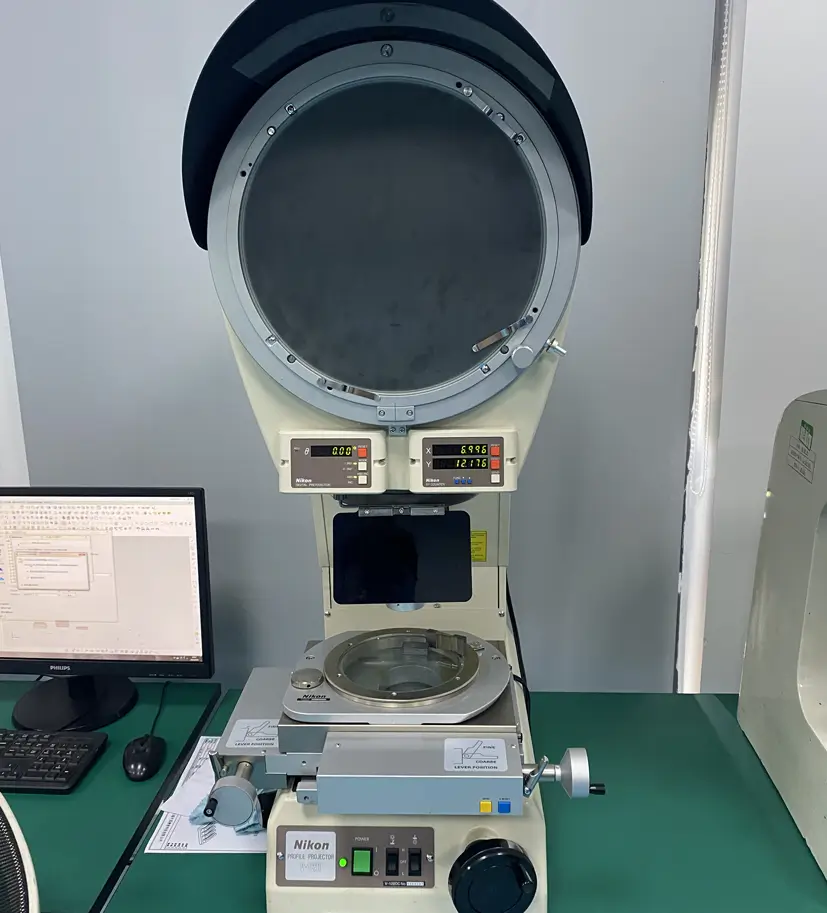
Precision Inspection
for Trim & Form Tooling Quality
Critical features such as cutting edges, tooth profiles, die openings, mounting holes, and fitting surfaces are inspected to help ensure stable cutting performance and accurate assembly in semiconductor trim and form applications.
-
Cutting edge sharpness and chipping inspection
-
Tooth profile and pitch consistency check
-
Die opening and clearance dimension inspection
-
Mounting hole position and fitting tolerance check
-
Flatness verification on key contact surfaces
-
Surface finish, burr, and coating appearance inspection
-
Inspection reports can be provided based on your project requirements.
Why We Provide Engineer-Reviewed Quotes
We do not quote custom precision parts based solely on size or weight algorithms. Every submitted drawing is meticulously reviewed by our engineering team to assess machining feasibility, identify potential tolerance risks, verify material selection, and explore cost-saving routing options. This ensures you receive a highly accurate price, a realistic lead time, and a manufacturing plan that guarantees success.
Our Ordering Process
We are a direct-to-factory manufacturer, not a brokered quote platform. Every component is engineered, machined, and inspected in-house at Sundi. This ensures complete control over technical precision, production lead times, and data security from your initial drawing to final delivery.
Send RFQ
Submit your 2D/3D CAD models and technical specifications via our secure online form or direct email.
Review & Quote
Our technical team evaluates your drawings for manufacturability and provides a detailed, data-driven quotation within 12 hours.
Confirm Order
Finalize technical parameters, confirm tolerances, and lock in the production schedule prior to contract sign-off.
Production
CAM programming is executed, and production begins across our specialized CNC, EDM, or stamping lines.
Quality Inspection
In-process dimensional checks and a comprehensive final inspection ensure all parts meet specified tolerances before leaving the floor.
Packaging & Shipping
Components are meticulously packed using dedicated protective materials to prevent transit damage and shipped globally.
FAQ
What file formats do you need for a custom tooling quote?
We accept standard 2D and 3D CAD files, including STEP, IGES, DXF, DWG, and PDF. Simply send us your drawings with material and coating requirements, and we typically provide a detailed quote within 8 hours.
Will you sign an NDA before I send my proprietary die drawings?
Yes, absolutely. We strictly protect your intellectual property (IP). We are ready to sign a Non-Disclosure Agreement (NDA) before you share any files. All customer drawings and design data are kept strictly confidential.
What is your standard lead time for trim and form replacement parts?
Our standard lead time is typically 7 to 15 days, depending on part complexity, material requirements, and order volume. We understand the urgency of machine downtime and prioritize fast turnarounds without compromising dimensional accuracy.
Do you have a Minimum Order Quantity (MOQ) for custom punches and dies?
No strict MOQ. We support both single-piece orders for engineering validation and high-volume runs for your regular maintenance inventory. You can order exactly what you need.
What materials do you recommend for highly abrasive resin cutting?
For resin and dambar removal, we highly recommend premium Tungsten Carbide (such as specific grades from Fuji, Sumitomo, or Ceratizit) due to its exceptional wear resistance against silica fillers. We can also apply functional coatings like DLC (Diamond-Like Carbon) to minimize resin adhesion and further extend tool life, based on your specific drawing requirements.
